


2 years ago
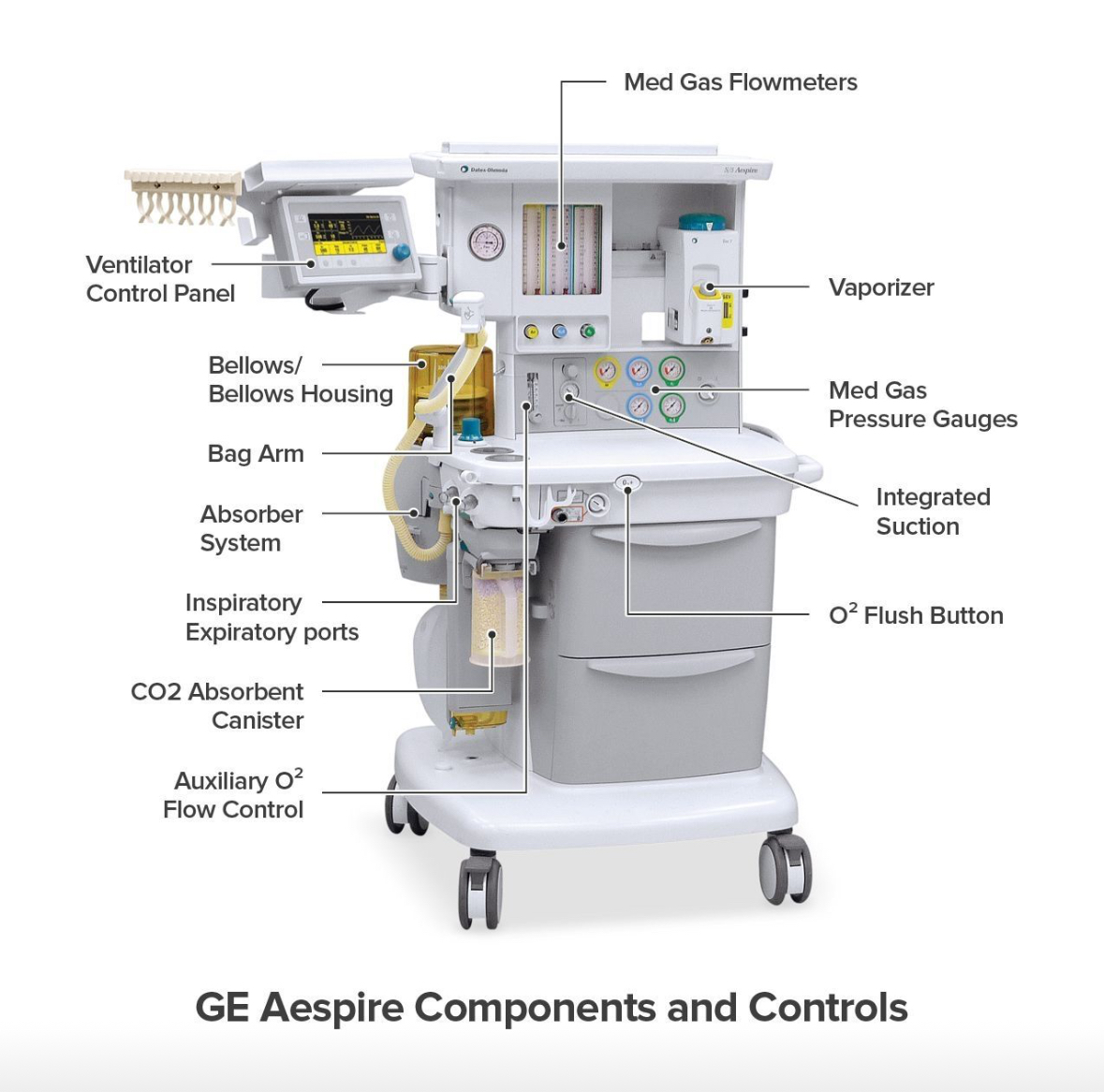
The major components of an #anesthesia machine include:
1. Gas cylinders or pipeline supply: These provide the necessary gases, mainly oxygen, nitrous oxide, and sometimes air, which are crucial for sustaining respiration and creating the anesthetic mixture.
2. Gas pressure regulators: These regulate the pressure of gases from the cylinders or pipelines to a safe and usable level.
3. Flow meters: These control the flow rates of gases and allow the anesthetist to set the desired concentration of the anesthetic agent.
4. Vaporizers: These vaporize liquid anesthetic agents, such as volatile inhalational anesthetics, and mix them with the carrier gases to ensure precise control over the concentration of anesthesia delivered to the patient.
5. Breathing system: This enables the delivery of the anesthetic mixture to the patient. It typically consists of a patient circuit, which includes the inspiratory and expiratory limbs, a breathing bag, and a mechanical ventilator (optional).
6. Monitors: An anesthesia machine also incorporates various monitors like oxygen analyzers, pressure gauges, flow sensors, and anesthetic agent monitors to ensure patient safety and enable constant monitoring of vital parameters during anesthesia.
Now, let's explore how an anesthesia machine works:
1. The machine receives gases from the supply source, either cylinders or pipelines.
2. The gases enter the anesthesia machine through the gas pressure regulators, which control and stabilize their pressure.
3. The flow meters enable the anesthetist to adjust the flow rates of gases, ensuring precise control over the anesthesia being delivered.
4. If volatile anesthetic agents are used, the vaporizers vaporize the liquid anesthetic and mix it with the carrier gases in the desired concentration.
5. The anesthetic mixture then flows through the breathing system, where it is delivered to the patient via the patient circuit.
6. During the procedure, the anesthetist monitors the patient's vital signs, including oxygen level, blood pressure, heart rate, and end-tidal CO2, using the incorporated monitors.