


2 years ago
A 12-lead ECG is a diagnostic tool that records the electrical activity of the heart from 12 different leads or viewpoints. It's a painless, non-invasive test that takes about 10 minutes to complete.
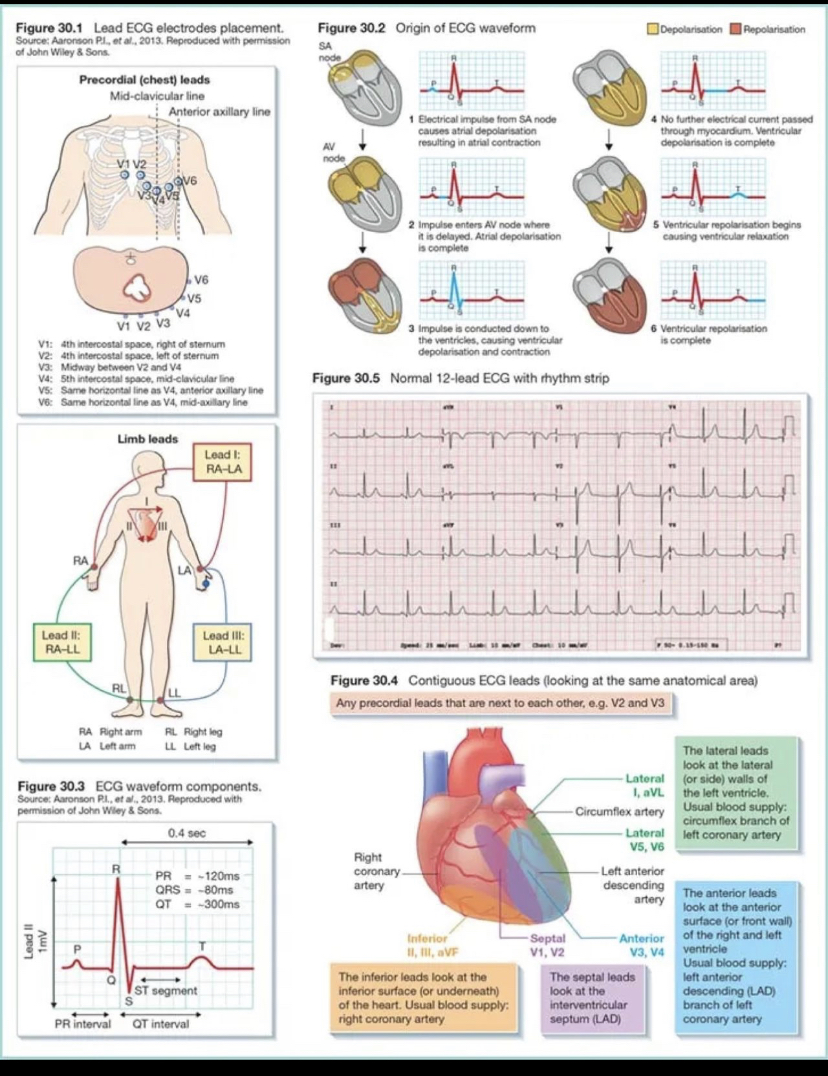
The ECG tracing consists of a series of waves and intervals that represent the different stages of the heart's electrical cycle. The main waves are:
P wave: Represents the depolarization of the atria, the upper chambers of the heart.
QRS complex: Represents the depolarization of the ventricles, the lower chambers of the heart.
T wave: Represents the repolarization of the ventricles.
U wave: Represents the repolarization of the atria.
The intervals between the waves and the amplitude of the waves can provide information about the heart's rhythm, rate, and electrical activity.
The 12 leads of an ECG are divided into three groups:
Limb leads: These leads are placed on the arms and legs and provide information about the heart's electrical activity in the frontal plane.
Chest leads: These leads are placed on the chest and provide information about the heart's electrical activity in the horizontal plane.
Unipolar leads: These leads are a combination of limb and chest leads and provide information about the heart's electrical activity from different angles.
A 12-lead ECG can be used to diagnose a variety of heart conditions, including:
Arrhythmias: Abnormal heart rhythms
Myocardial infarction: Heart attack
Heart failure
Pericarditis: Inflammation of the sac around the heart
Electrolyte imbalances
Our reference :http://linkedin.com/in/saad-al-anazi-8413981b4